IIG OS
IIG OS is an operational system for brands and teams, developed in stages. It brings together the panel, catalogue and selected sales, logistics and communication workflows; further integrations and automations undergo separate implementation and acceptance checks.
A system designed around the real work of a company
IIG OS was created as a dedicated product rather than a collection of disconnected integrations. PAR HOUSE Agency is responsible for process analysis, information architecture, interface design, development, security, automation and continued evolution. The system connects LE POSSÉ, PAR HOUSE Agency and further workspaces in one controlled environment.
Every workspace has its own roles, permissions and data scope. Team members see only the modules required for their work and operations are recorded. Sensitive actions use a prepare, validate and execute journey that enables automation without surrendering control.
Shared navigation organises Commerce, Fulfilment, Catalogue, Inventory and production, Growth, Finance, Insights, communication, security and administration. The roadmap presents the state of every area, dependencies, the latest gap and the next safe step.
2026
Services
- Infrastructure administration and management
- Process automation
- Backend development
- Branding and brand strategy
- e-Commerce
- Frontend development
- Hosting deployment
- API and third-party tool integrations
- Ad campaigns and performance marketing
- Art direction
- Content creation: social media, reels and storytelling
- SEO optimisation
- Graphic design
- UI design
- UX design
- Content editing and copywriting
- Visual identity
- Mental support and strategic advice
- BaseLinker and e-Commerce systems
- Business or product photography
- 2D/3D scenes and product visualisations
- Mobile application
- Search engine optimisation
 Adrian Koziński
- Łukasz Bielamowicz
- Aleksandra Bubicz
- Dawid Glura
- Natalia Banasiak
- Jakub Zalewski
- Oleksandr Melnyk
- PAR HOUSE Agency
Commerce structures orders, customers, payments, returns and loyalty. The fulfilment design covers picking, EAN and SKU identification, shipment statuses and logistics integrations. Receiving a return, restoring stock and refunding a payment remain separate actions, so a parcel status cannot replace financial settlement.
Product Master brings together product, variant, material and identifier data. Development covers GS1 and MODIVO workflows through Mirakl, catalogue mapping and connections between stock and production data. Integrations are activated and checked separately for each brand; preparing a connection does not mean the entire catalogue has been synchronised.
Communication and AI Inbox form the direction for shared handling of mailboxes, documents and customer context. The design includes data recognition, mapping suggestions and review of changes before saving. The shared owner panel is intended to connect brands while keeping their data, senders and support separate; Care is being developed as a distinct client interface.
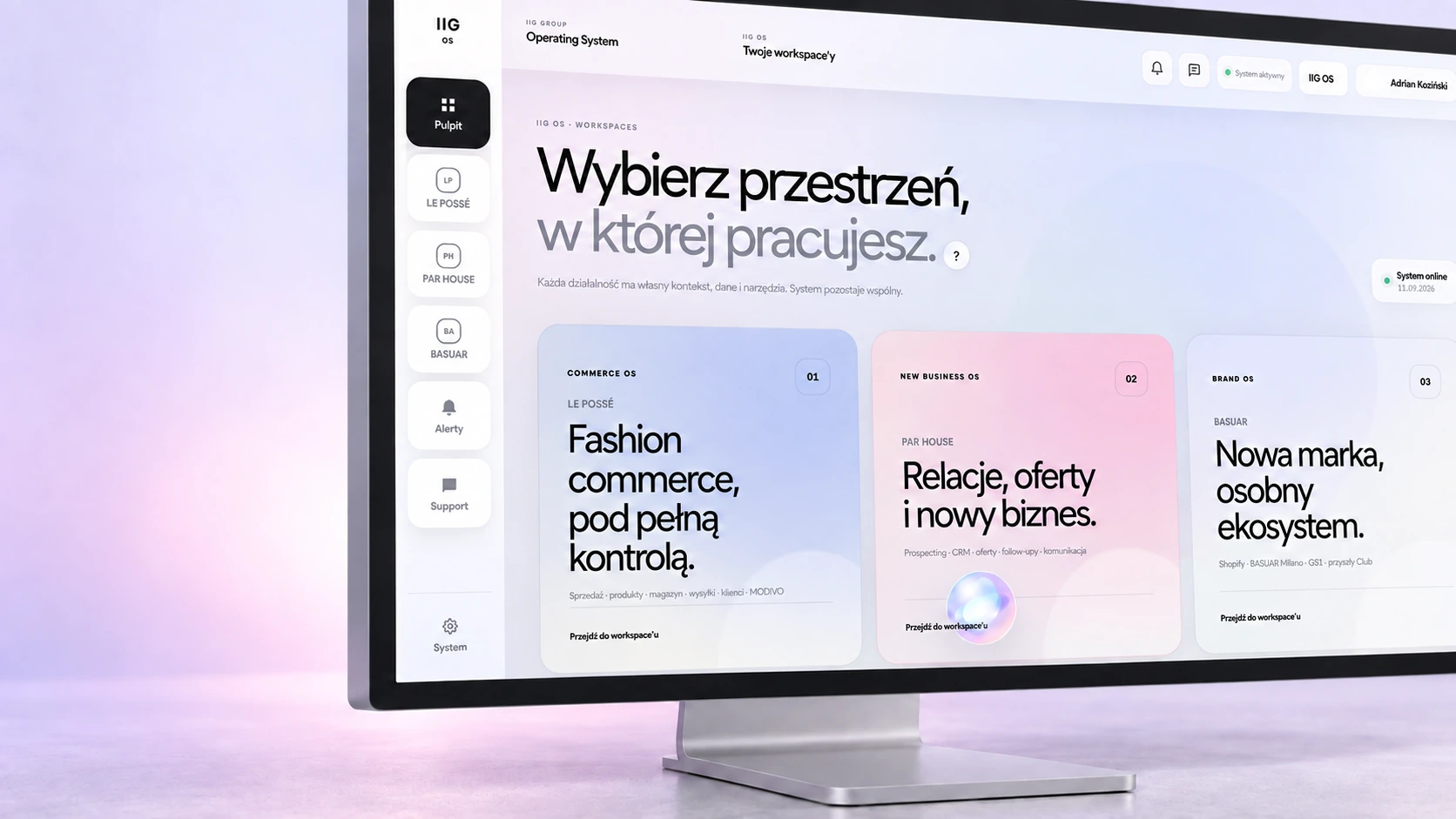
A platform that presents the complete operational state
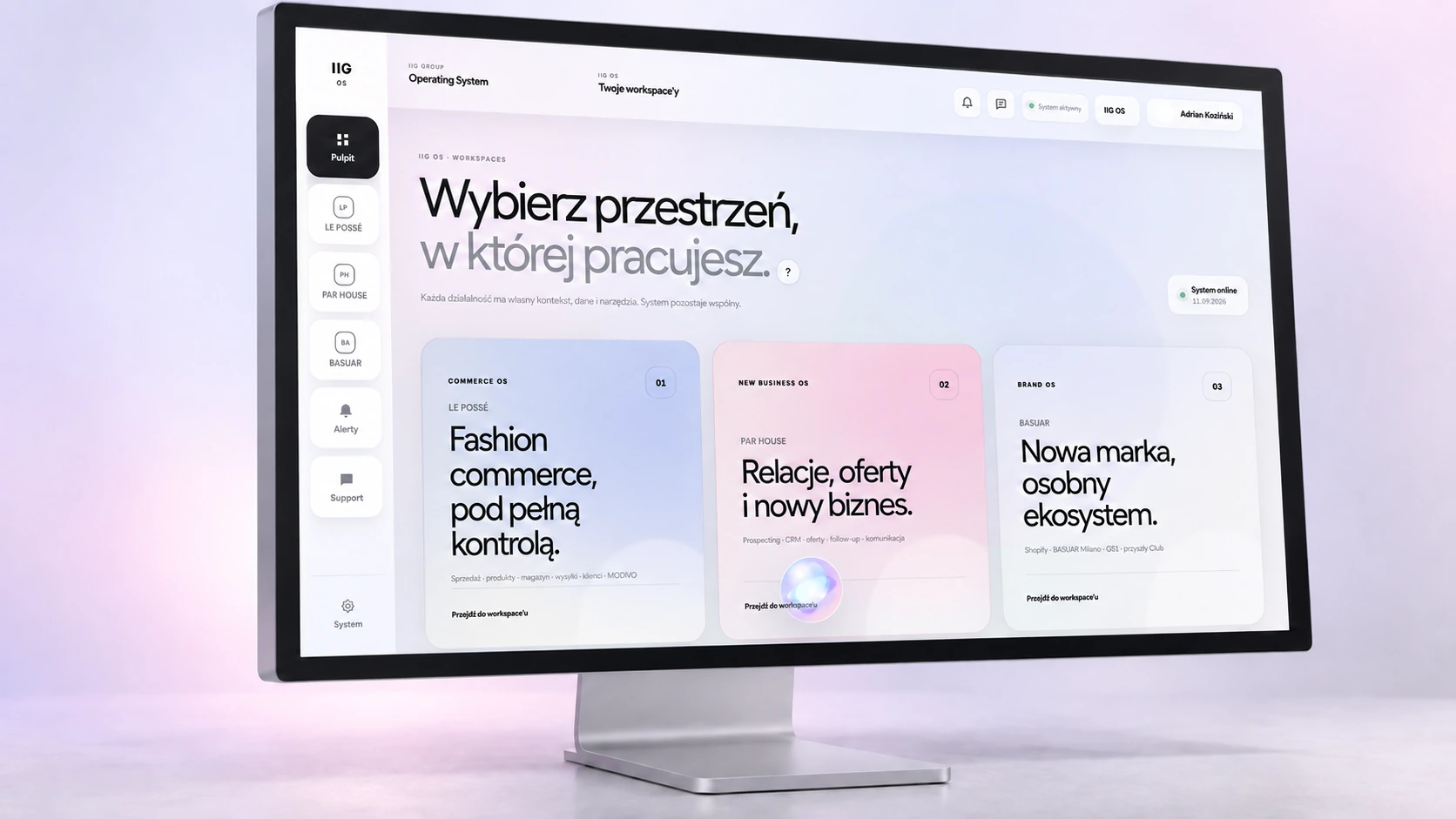
System screens present workspaces, roadmap, Commerce, integrations, communication and security controls without exposing customer data or financial values.
A modern interface simplifies complex processes. Users see context, state, responsibility and the next action instead of raw tables distributed across many tools.
Finance, Growth, AI and security in one environment
Finance and Insights are being developed around source documents, costs, liabilities and sales analysis including returns. Linking documents to products and production, and reconciling accounts, are separate stages. Displaying data does not replace payment confirmation or completed settlement.
Growth covers campaigns, advertising catalogues, lead workflows, SEO and content. AI functions are designed to support analysis and preparation of actions, with permission checks before execution. Security development covers roles, workspace isolation, sessions and activity logs; deploying a module and accepting an entire workflow are treated separately.
This case study presents the architecture, selected screens and scope of an evolving product. It does not imply that all integrations are complete or every feature is active for every brand. Further stages cover shared brand operations, complete financial workflows and acceptance of integrations in real use.

